

Indigenous Business Capability Statement Australia
Present your Indigenous ownership, capabilities, project experience and procurement credentials in a clear, professional capability statement built for government and corporate opportunities.
We create tailored, tender-ready capability statements that bring together the evidence buyers need to understand your business, including ownership and Supply Nation status, services, experience, workforce capacity and Indigenous participation.
View Examples
Opening doors to Indigenous procurement opportunities
We will help create your winning Capability Statement
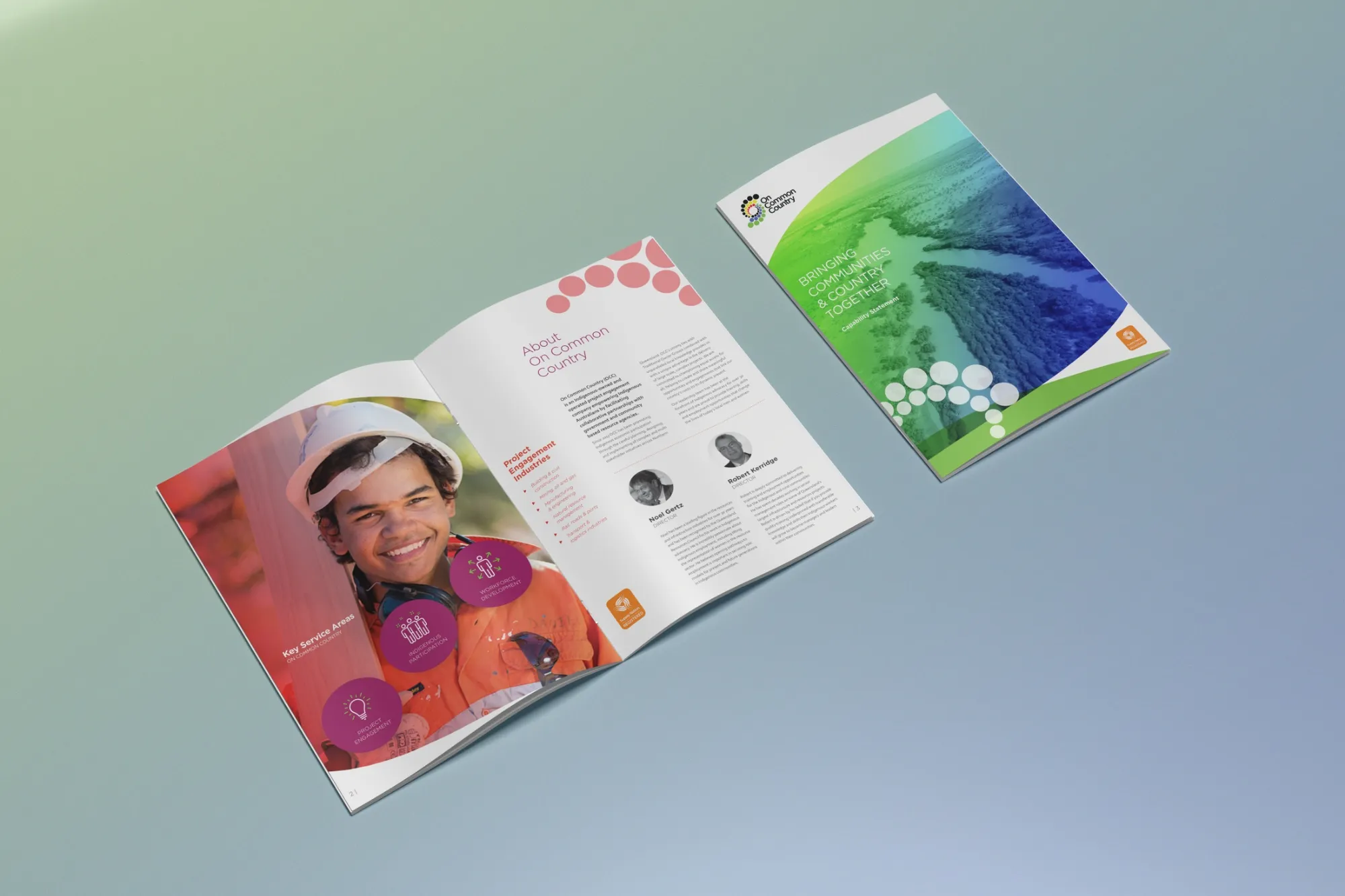
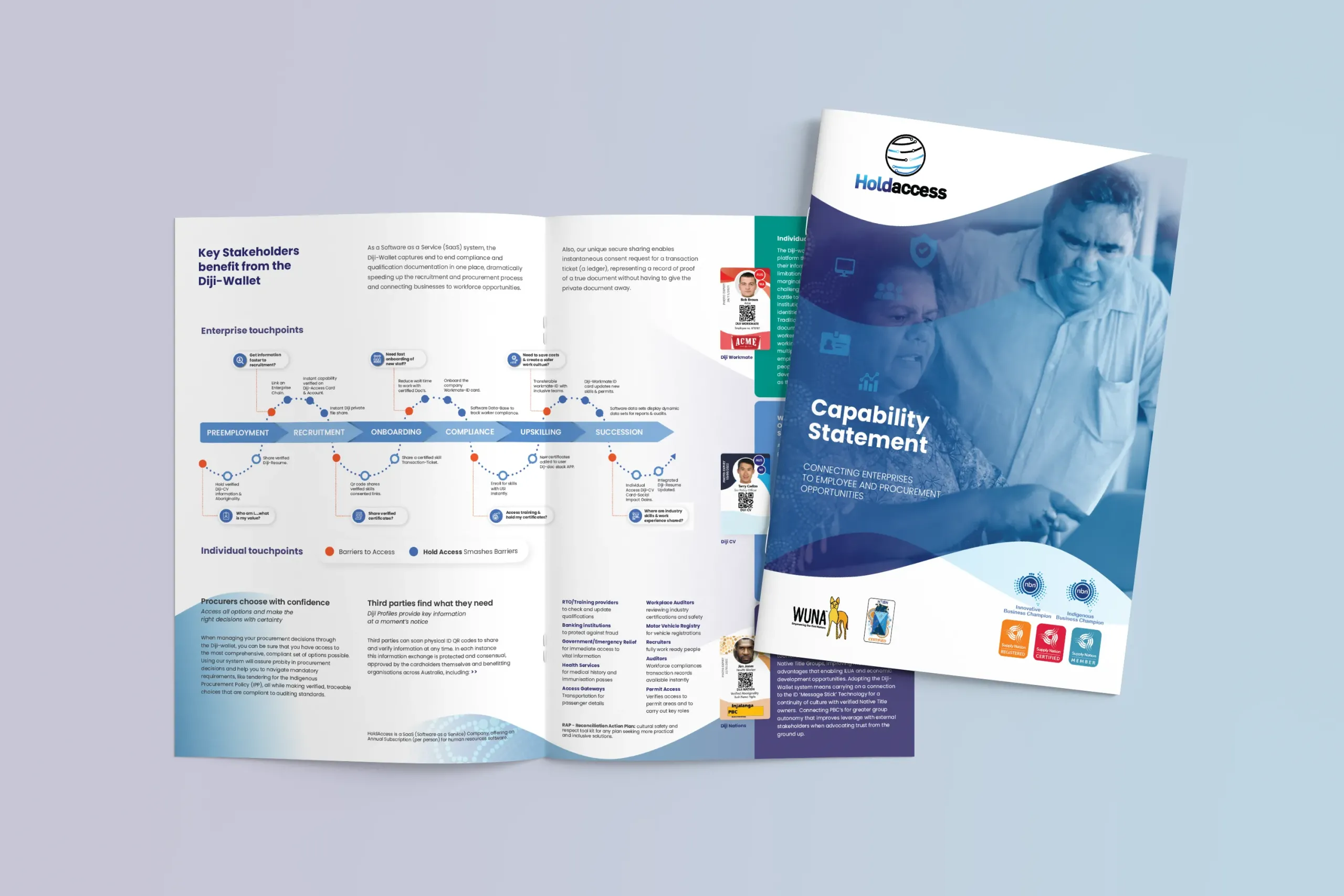
What Is an Indigenous Business Capability Statement?
An Indigenous business capability statement is a concise business document that shows procurement teams what your business does, its Indigenous ownership and credentials, its capacity to deliver, and the experience and evidence that support its capabilities.
For government and corporate buyers, it provides a quick way to assess whether your business is relevant and ready for a procurement opportunity.
A strong Indigenous business capability statement typically communicates:
Capability Statement vs Company Profile vs Tender Response
While these documents can contain similar business information, they serve different purposes in the procurement process.
| Capability Statement | Company Profile | Tender Response | |
|---|---|---|---|
| Purpose |
Demonstrates your capabilities and procurement readiness |
Provides a general overview of your business |
Responds to the requirements of a specific opportunity |
| Audience |
Procurement teams, government buyers and corporate supply chains |
Clients, partners and general stakeholders |
The organisation evaluating a specific tender |
| Content |
Capabilities, ownership evidence, credentials, experience, capacity and project proof |
Business background, services, values and general experience |
Detailed responses against specified criteria, scope and requirements |
| Use |
Introductions, supplier registration, shortlisting and early procurement stages |
General business marketing and introductions |
Formal tender or procurement submissions |
| Customisation |
Can be tailored for different buyers and opportunities |
Usually remains relatively general |
Written specifically for each tender |
An Indigenous business capability statement sits between a general company profile and a full tender response. It gives buyers enough evidence to understand who you are, what you can deliver and whether your business is relevant to an opportunity, without responding to the detailed requirements of a specific tender.
Why an Indigenous Business Capability Statement Matters for Government Opportunities
Government buyers often need to quickly determine whether a supplier has the right ownership status, services, experience, capacity and procurement credentials for an opportunity. A well-structured capability statement brings that evidence together in one place, making the business easier to assess during early procurement and supplier-selection stages.
It can help buyers review:
A capability statement does not guarantee shortlisting or contract success. Its role is to give buyers clear, verifiable information they can use when deciding whether your business should progress to the next stage of an opportunity.
When Is a Capability Statement Used Instead of a Full Tender Response?
A capability statement is usually used when a buyer needs a concise overview of your business before requesting a more detailed procurement response.
It may be requested or used during:
A full tender response is different because it addresses one specific opportunity, including the buyer’s scope, evaluation criteria, schedules, methodology, pricing and contractual requirements.
How Should an Indigenous Business Evidence Its Indigenous Ownership?
Indigenous ownership should be stated clearly and supported by current, verifiable information. Buyers may need to understand not only that the business is Indigenous-owned, but also the ownership percentage, verification status and any relevant registration or certification details.
A strong capability statement can include:

For example, rather than writing:
We are a proudly Indigenous-owned business.
a stronger version would be:
[Business Name] is 51% Indigenous owned, managed and controlled and is Supply Nation Certified. Our current certification details are included in this capability statement.
Supply Nation Registered vs Certified
Supply Nation uses Registered and Certified to distinguish different Indigenous ownership and control criteria. These terms shouldn’t be used interchangeably in a capability statement.
| Supply Nation Registered | Supply Nation Certified | |
|---|---|---|
| Indigenous ownership |
At least 50% Indigenous owned | At least 51% Indigenous owned |
| Management and control |
Ownership threshold is the key distinction |
Indigenous owned, managed and controlled |
| How to present it |
State the business is Supply Nation Registered |
State the business is Supply Nation Certified |
| Supporting details |
Include current registration details where relevant |
Include current certification details where relevant |
The capability statement should use the business’s actual current Supply Nation status rather than describing every Indigenous-owned business as “Certified”.
Where Should Supply Nation Status and Registration Details Appear?
Supply Nation status should be easy for a buyer to find and verify. Rather than treating certification as a decorative logo, present the business’s current status alongside the information that supports its Indigenous ownership credentials.
A capability statement can show this information in a few key places:
How Should an Indigenous Joint Venture Show Ownership and Control?
An Indigenous Joint Venture should make its ownership, management and control structure easy to understand. The capability statement should show how the JV is structured, which entities are involved and how Indigenous ownership and decision-making are represented.
Useful information can include:

How Does a Capability Statement Align With the Indigenous Procurement Policy?
An Indigenous business capability statement can support procurement under the Indigenous Procurement Policy (IPP) by presenting the ownership, verification, delivery and participation evidence that buyers may need when assessing the business.
Relevant information may include:
The capability statement should present this information clearly, but it does not replace the buyer’s own eligibility checks, tender schedules or opportunity-specific requirements.

What Changes for State and Territory Buyers?
Indigenous procurement requirements can vary between federal, state and territory governments, so a capability statement may need to be tailored to the requirements of the buyer and jurisdiction.
| What May Vary | What to Check |
|---|---|
| Indigenous business eligibility |
The ownership, control or verification criteria recognised by the buyer |
| Supplier registration | Whether the business needs to appear on a particular supplier register or procurement platform |
| Required credentials | Licences, insurances, prequalifications or certifications relevant to the jurisdiction and contract |
| Indigenous participation |
Any employment, subcontracting, supplier spend or participation requirements relevant to the opportunity |
| Procurement category | How your services should be described and matched to the buyer’s procurement categories |
The capability statement should use the business’s actual current Supply Nation status rather than describing every Indigenous-owned business as “Certified”.
Where Should You Upload Your Indigenous Business Capability Statement?
A capability statement is most useful when it is available through the supplier databases, procurement platforms and buyer networks your target clients actually use. The right channels depend on your location, industry and the type of contracts you are pursuing.
Useful places to consider include:
Indigenous supplier directories
Maintain your business profile and current capability information on relevant Indigenous supplier directories where your business is eligible to be listed.
Government supplier portals
Upload or provide your capability statement when registering with federal, state, territory or local government procurement platforms relevant to your services.
Prequalification and panel systems
Include an up-to-date statement when applying for government panels, construction prequalification schemes or other approved supplier arrangements.
Corporate procurement networks
Major contractors and organisations with Indigenous procurement commitments may operate their own supplier onboarding systems or request capability statements directly.
Direct procurement introductions
Keep a current version ready to send to procurement teams, project managers and head contractors when introducing your business or responding to an early-stage opportunity.
What Sections Should an Indigenous Business Capability Statement Include?
A strong Indigenous business capability statement should give buyers enough information to verify your ownership, understand what you deliver and assess whether your business is suitable for the opportunity.

01.
Company Snapshot
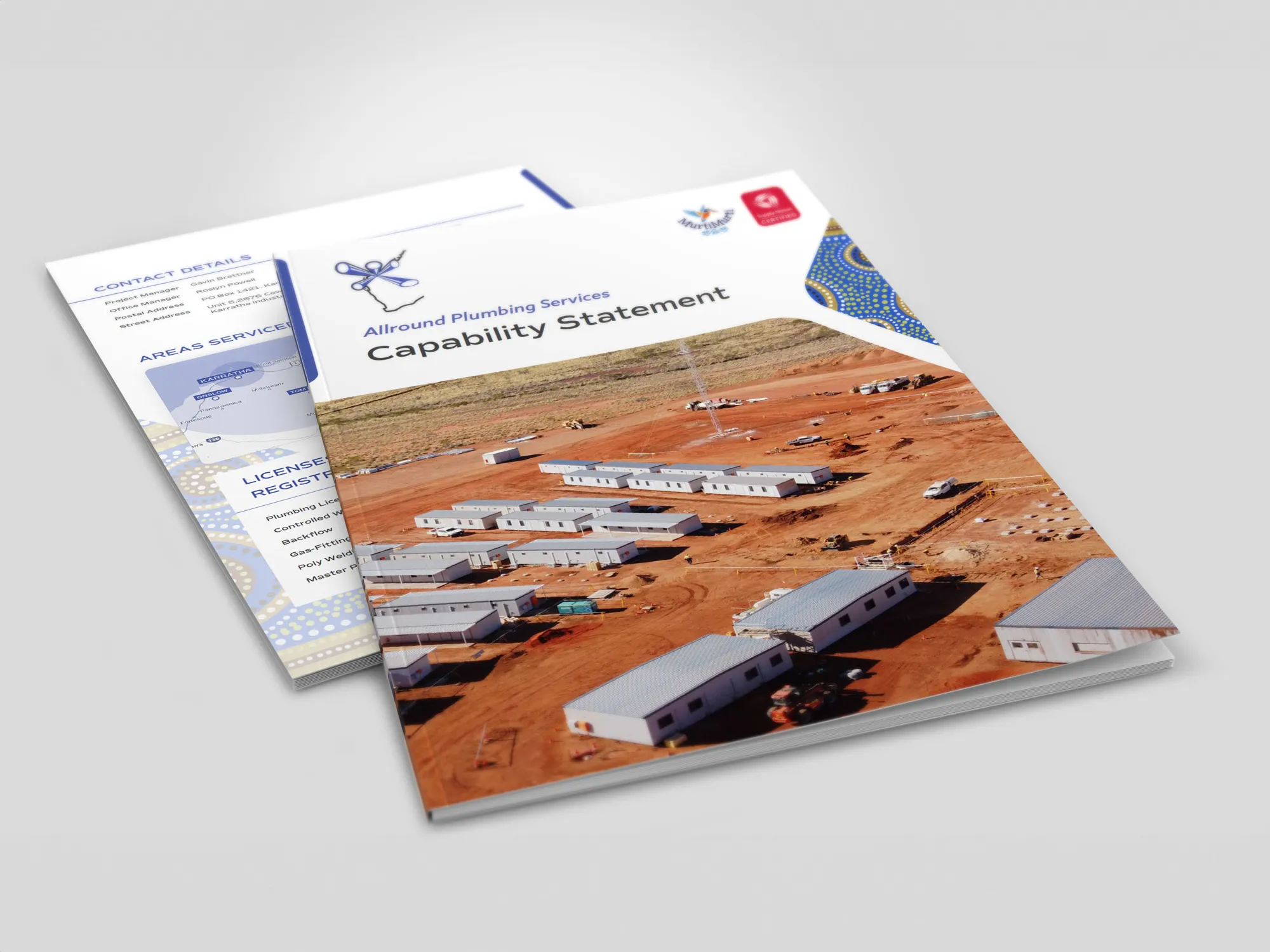
Summarise who you are, where you operate, your Indigenous ownership structure and the markets or procurement categories you service. Buyers should be able to understand the business at a glance.
02.
Core Services and Capability Matrix
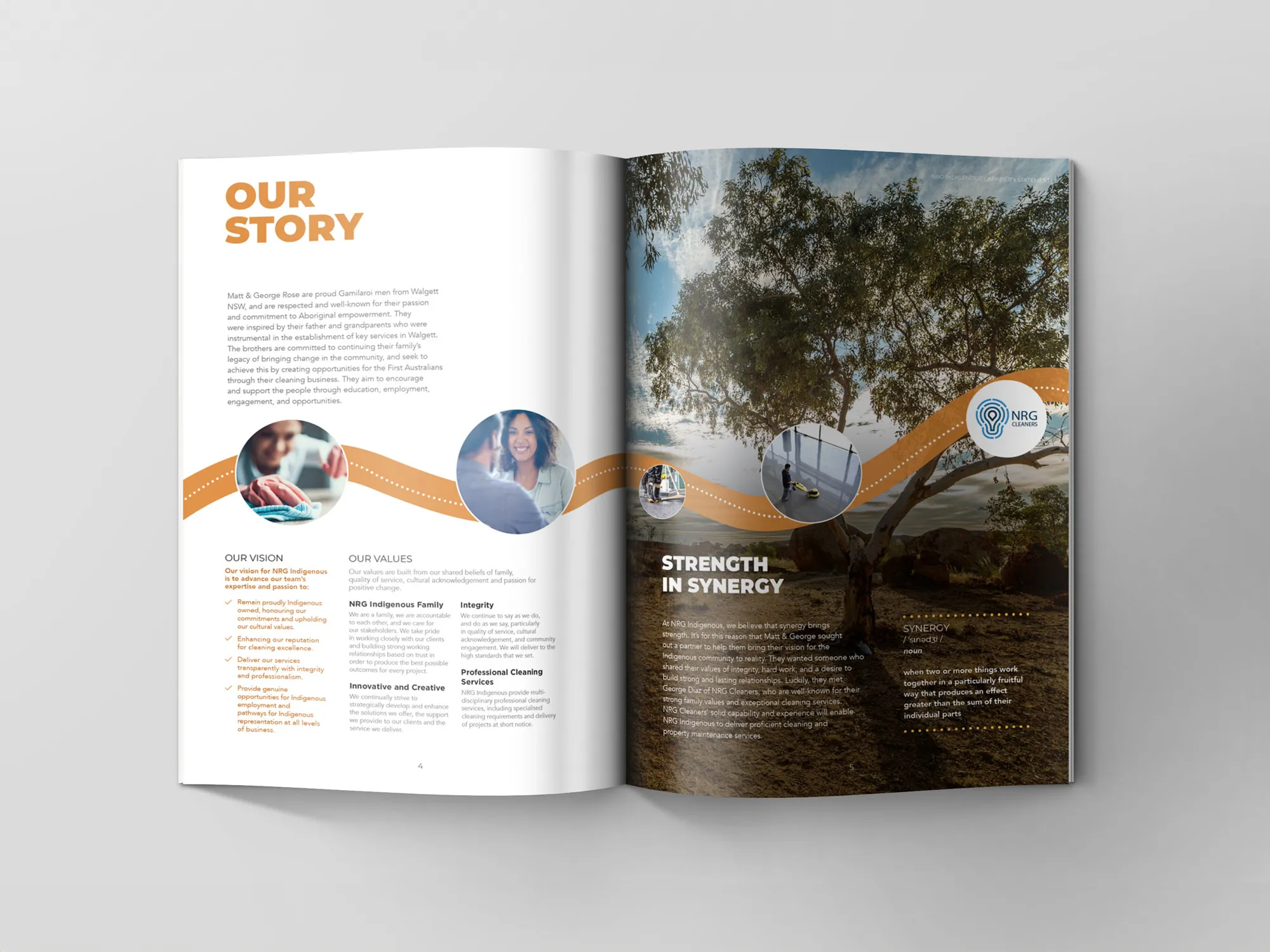
Present your services in a structured way so procurement teams can quickly match them to the scope or category they are buying.
03.
Project Experience
Include relevant projects with enough detail to show what was delivered, your role, contract value or value band, timeframe, outcomes and referee information where appropriate.

04.
Key Personnel and Workforce Capacity
Show the people and resources behind the business, including leadership, specialist expertise, workforce numbers, operational locations and Indigenous employment where relevant.
05.
Indigenous Ownership and Verification
State your ownership percentage and current verification status clearly, including Supply Nation registration or certification details where applicable.

06.
Licences, Accreditations and Memberships
List current credentials relevant to the work you perform, using the correct licence, accreditation, standard or membership name rather than broad claims about compliance.
07.
Insurance, WHS and Risk Management
Present the insurance, safety systems, policies and risk-management evidence buyers may need during supplier assessment or prequalification.

08.
Panels, Prequalifications and Supplier Registers
Include relevant approved supplier panels, prequalification schemes and registers, along with the category or status where useful.

09.
Indigenous Participation and Cultural Identity
Where relevant to the business, include meaningful information about cultural identity, Indigenous employment, supplier participation, community outcomes or other measurable commitments.
What Should the Company Snapshot Include?
The company snapshot should give procurement teams a quick, factual overview of the business before they move into the detailed capability and project evidence. Keep it concise and prioritise information that helps a buyer understand who you are, where you operate and whether your business is relevant to their procurement needs.
Include:

The snapshot should work as a quick-reference section, not a condensed About Us page. More detailed information about services, projects, personnel and credentials can then be presented in the sections that follow.
How Should Services Be Presented in a Capability Matrix?
A capability matrix helps procurement teams quickly understand what your business delivers, where that capability applies and the evidence behind it. Instead of simply listing services, connect each capability to relevant experience and delivery capacity.
| Core Capability | Scope of Service | Relevant Experience | Delivery Capacity |
|---|---|---|---|
| [Service / Capability 1] |
Brief description of the work delivered |
Relevant project, client type or sector |
Team, equipment, location or capacity |
| [Service / Capability 2] |
Brief description of the work delivered |
Relevant project, client type or sector |
Team, equipment, location or capacity |
| [Service / Capability 3] |
Brief description of the work delivered |
Relevant project, client type or sector |
Team, equipment, location or capacity |
The matrix should use specific service terminology that reflects how buyers procure the work, while avoiding broad claims that aren’t supported elsewhere in the capability statement.
For example, rather than listing “Civil Construction” alone, a contractor could break that capability into specific areas such as earthworks, drainage, roadworks or site preparation, then connect each service to relevant delivery experience.
How Should Past Projects Be Presented?
Past projects should show buyers that your business has delivered work relevant to the services, scale and requirements they are assessing. A project entry should provide enough detail to demonstrate what you delivered and the evidence behind that experience, rather than relying on client logos or project names alone.
For each relevant project, include:

A project entry could be structured like this:
Regional Infrastructure Upgrade | Government Client
Delivered civil works across multiple regional sites, including site preparation, drainage and associated works. Contract value: $1.2–$1.5 million. Completed over eight months with all contracted works delivered within the agreed project timeframe.
Not every project needs the same level of detail. Prioritise examples that are most relevant to the type, value, complexity and sector of the opportunities you’re targeting.
How Can a New Indigenous Business Show a Track Record Without Government Contracts?
A business does not need prior government contracts to demonstrate capability. The key is to use relevant evidence from commercial, subcontracting, community, private-sector or previous professional experience that shows the business can deliver the type of work being targeted.
How Should Key Personnel and Workforce Capacity Be Presented?
Buyers need to understand whether your business has the people, skills and resources to deliver the work. The capability statement should show both who leads delivery and what workforce capacity sits behind them.
Useful information can include:
Key personnel
Names, roles, qualifications and relevant project experience
Leadership and technical responsibilities
Who manages operations, projects, safety, quality or specialist delivery
Workforce size
Current employee numbers or available delivery capacity where relevant
Indigenous employment
Number or percentage of Indigenous employees where this is accurate and useful
Geographic capacity
Locations, regions or project areas the workforce can service
Mobilisation capability
Ability to scale, travel or deploy teams for larger or regional projects
Specialist skills
Licences, trade qualifications or technical expertise held by the team
Where Indigenous employment is included, measurable information is more useful than broad statements such as “committed to Indigenous employment”. Numbers, percentages, programs or documented outcomes give buyers something concrete to assess.
Which Accreditations, Licences and Memberships Should Be Listed?
Include credentials that are current, relevant to the work you perform and useful to the buyer assessing your business. The strongest entries identify the exact licence, certification, standard or membership rather than using general statements.
You can group them as:
What Insurance, WHS and Risk Evidence Should Be Included?
The capability statement should show the current insurance, safety and risk-management information that is relevant to the work being procured. Buyers should be able to see what cover and systems are in place without having to interpret vague statements about “compliance”.
| Evidence Area | What to Include |
|---|---|
| Insurance | Policy type, insurer, level of cover and expiry date where appropriate |
| WHS | Relevant WHS policies, procedures, management systems or certifications |
| Risk Management | Documented risk-management processes, registers or frameworks used in project delivery |
|
Environmental Management |
Relevant environmental systems, policies or certifications where applicable |
| Quality Management | Documented quality systems or recognised certifications, including the standard number where relevant |

How Should Prequalification Panels and Supplier Registers Be Presented?
If your business holds current panel, prequalification or supplier-register status, include enough information for procurement teams to understand where you are approved and what that approval covers.
For each relevant listing, include:
For example:
[Prequalification Scheme]
Category: Civil Construction | Level: [X] | Registration: [ID] | Current to: [Date]
How Should Cultural Identity Be Presented With Substance?
Cultural identity can strengthen an Indigenous business capability statement when it is specific, authentic and connected to the business. Rather than relying on broad statements about culture or community, explain the relationships, experiences and outcomes that genuinely form part of the organisation.
Relevant information may include:
Connection to Country and cultural heritage
Identify the relevant Nation, Country or community where the business chooses to share this information.
Community engagement and impact
Show specific programs, partnerships or outcomes rather than simply stating a commitment to community.
Indigenous leadership and governance
Explain how Indigenous people participate in the ownership, leadership and decision-making of the business.
Local and regional participation
Include involvement that demonstrates a genuine connection or benefit to the communities in which the business operates.
Support for Traditional Owner groups
Use specific, permissioned examples and explain the contribution or outcome.
Cultural capability and awareness
Identify relevant training, programs or credentials where these have actually been completed or delivered.
How Should Indigenous Artwork Be Used and Attributed?
Indigenous artwork should only be used where the business has the appropriate permission to reproduce it, and the artist and cultural context should be acknowledged clearly. The artwork should support the identity of the business rather than being used as generic decoration.
Include:

How Can Cultural Credentials Be Shown Without Tokenism?
Cultural credentials are strongest when they reflect the actual identity, relationships and activities of the business. Specific evidence gives buyers more meaningful information than symbolic or generic cultural statements.
| Instead of | Show |
|---|---|
| “Proudly supporting Indigenous communities” |
Specific partnerships, programs or community initiatives and their outcomes |
| “Committed to Indigenous employment” |
Indigenous workforce numbers, percentages, traineeships or employment outcomes |
|
Generic references to Indigenous culture |
Relevant Nation, Country or community connections where the business chooses to share them |
|
Decorative Indigenous imagery |
Permissioned artwork with appropriate artist and cultural attribution |
|
“Supporting Traditional Owners” |
Specific, permissioned examples of the relationship, activity or contribution |
| “Culturally capable team” |
Relevant cultural awareness training, provider, credential or completion details where applicable |
Which Indigenous Participation Commitments Should Be Included?
Indigenous participation commitments should be presented in measurable terms wherever possible. This makes it easier for buyers to understand the business’s current contribution and any targets connected to employment, supply-chain participation or community outcomes.
Useful measures can include:
Indigenous employment
Number or percentage of Indigenous employees, trainees or apprentices
Indigenous supplier spend
Current spend or target percentage directed to Indigenous-owned suppliers
Subcontracting participation
Indigenous subcontractor engagement or targets where relevant
Training and development
Apprenticeships, mentoring, qualifications or workforce-development programs
Community investment
Documented programs, partnerships or contributions with measurable participation or outcomes
Local participation
Employment, procurement or community benefits linked to the regions in which the business operates
Project-specific targets
Commitments that apply to a particular contract, client or delivery program
How Long Should an Indigenous Business Capability Statement Be?
An Indigenous business capability statement should be long enough to present the evidence buyers need without becoming difficult to scan. The right length depends on the business, its experience and the complexity of the opportunities being targeted.
| Format | Best Suited For |
|---|---|
| 1–2 pages |
Concise introductions, early procurement conversations or businesses with a relatively simple service offering |
| 3–4 pages |
Most businesses needing space for capabilities, ownership credentials, project experience, personnel and compliance information |
| 5+ pages |
Businesses with multiple service divisions, substantial project experience or more detailed procurement and technical credentials |
Regardless of length, the statement should prioritise the information buyers need to assess ownership, capability, capacity, experience and procurement readiness.
A professionally designed PDF is generally the most practical format for sharing, uploading to supplier portals and sending directly to procurement teams. Keep the file size manageable and the text searchable rather than embedding important information solely within images.
Capability Statement Examples
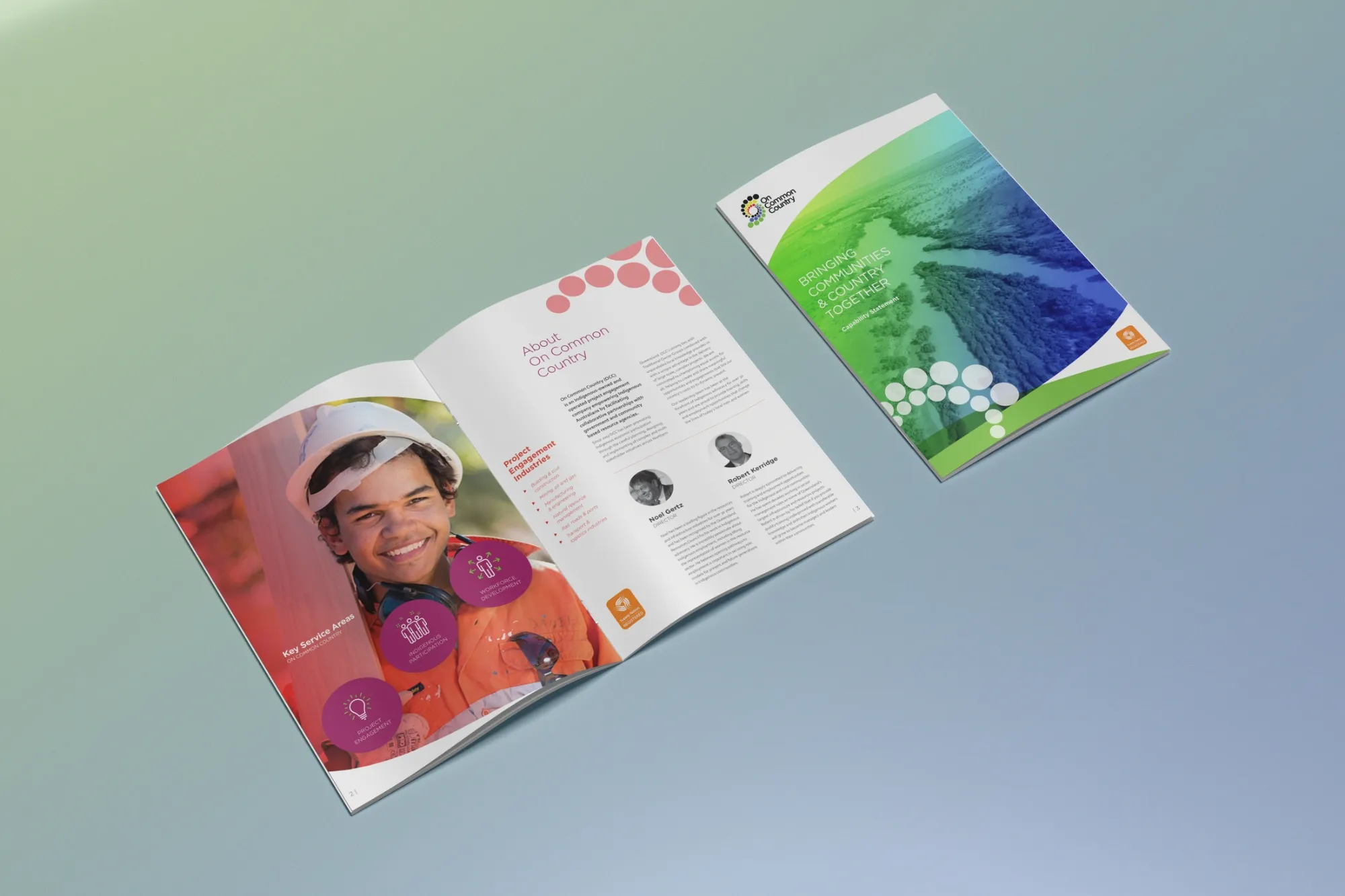
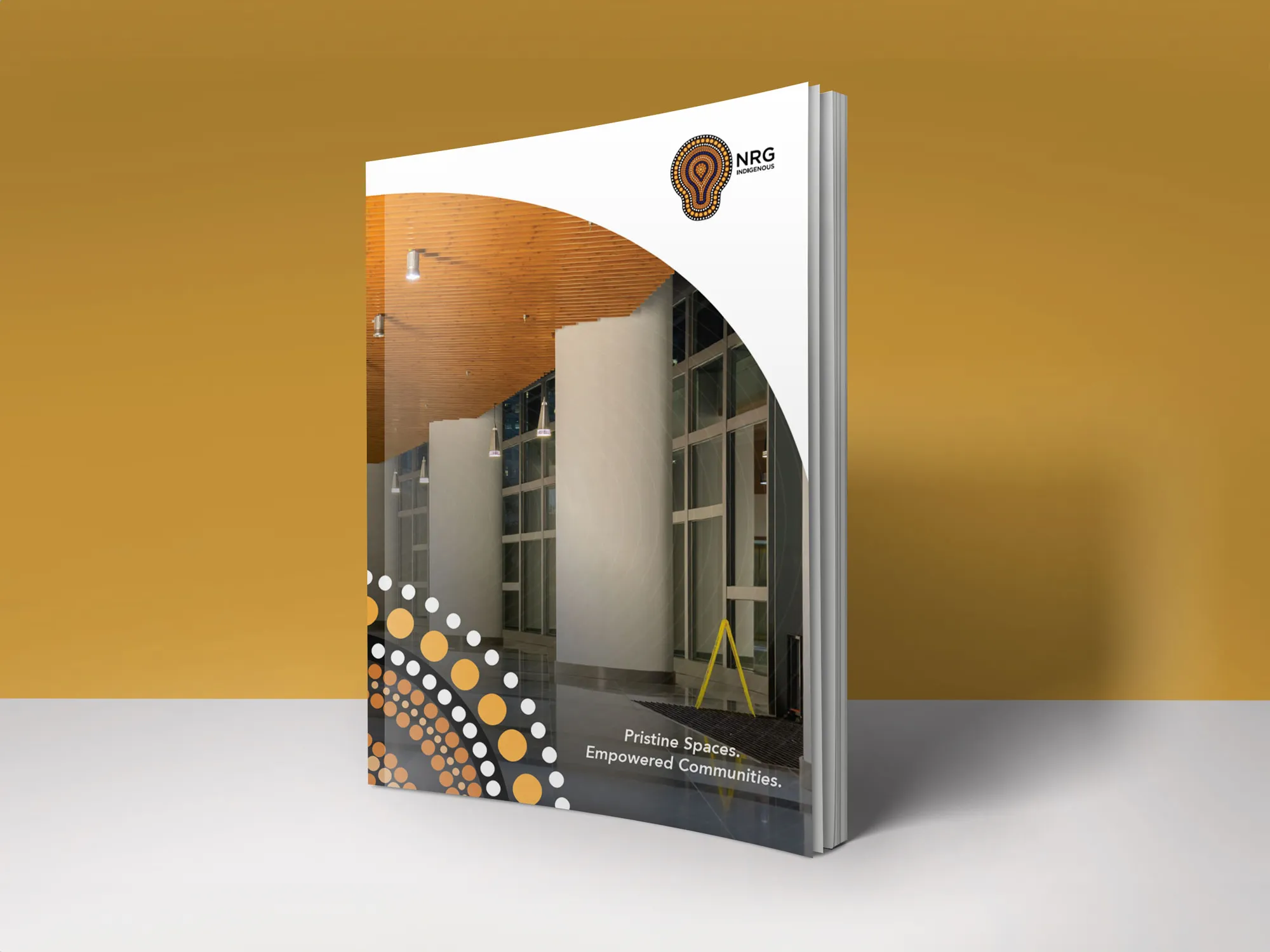
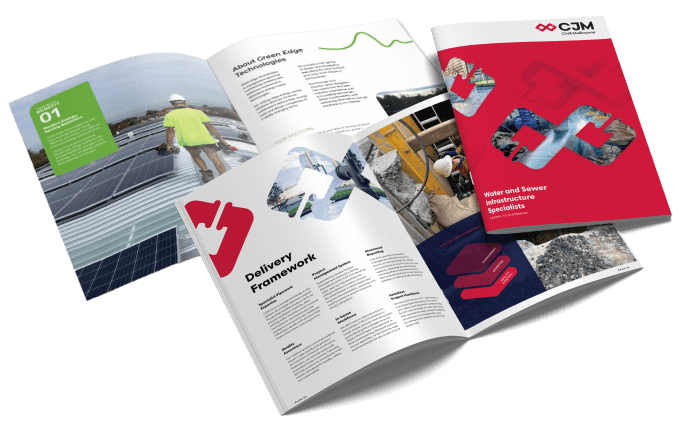
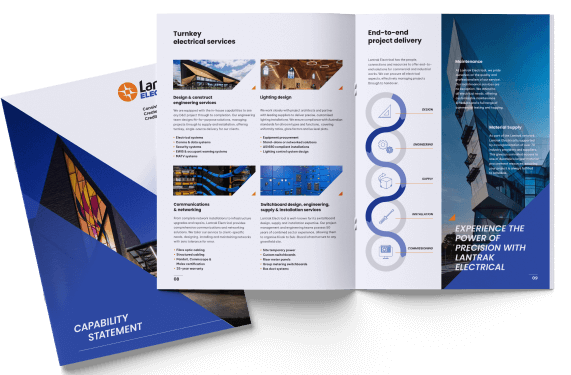
See how we turn business capabilities, experience and credentials into professionally written and designed capability statements.
Common Mistakes in Indigenous Business Capability Statements
A capability statement can contain all the right sections and still be difficult for buyers to assess if the information is vague, outdated or unsupported.

1
Using Generic Ownership Claims
Statements such as “100% Indigenous-owned” should be supported by the relevant ownership percentage, verification status and registration details where appropriate.
Using the Wrong Supply Nation Status
Registered and Certified are different statuses. The capability statement should use the business’s current status exactly rather than treating the terms as interchangeable.
2


3
Listing Capabilities Without Evidence
A long service list tells buyers what you offer, but not whether you have delivered it. Link key capabilities to relevant projects, personnel, resources or measurable outcomes.
Making Broad Compliance Claims
Avoid generic wording such as “fully compliant” where the document can instead name the actual licence, insurance, policy, certification or management system held.
4


5
Relying on Cultural Language Without Substance
Cultural identity and community commitments should be supported by genuine relationships, participation measures, permissioned examples or other specific evidence rather than decorative language.
Using Outdated Information
Expired insurance, old licences, previous workforce numbers, outdated Supply Nation details or superseded project information can weaken the document’s usefulness.
6


7
Sending the Same Version Everywhere
The core document can remain consistent, but the most relevant capabilities, projects and procurement evidence should reflect the buyer and opportunity being targeted.
What Our Clients Say
"The team's attention to detail and commitment to excellence truly set them apart. Thanks to you, we now have a powerful tool that consistently impresses our clients and partners."

"The team did a phenomenal job in developing our capability statement. The quality of the final product blew our team away. I highly recommend them."

"They have been professional, responsive and accommodating since I began dealing with them. Great communication and excellent turnaround time from initial consultation to completion."

"As someone with the computer skills of a house brick the idea of having to construct an effective Capability Statement was daunting to say the least. The team at Spark did a great job!"

They were great to work with and produced a capability statement that exceeded expectations whilst staying true to our existing branding. The quick turnaround time without compromising quality sets them apart. Highly recommended!"

"Carol & the team were great to work with to produce a company capability statement including design and copywriting, they were very attentive and professional. Our team was very impressed with the final product, we would definitely recommend working with them."

"The Team assigned to developing my Company Capability Statement was done with professionalism and done to plan. Also, good follow-up on potential other improvements to help with your business."

"Completed Perth Air and Power Solutions capability statement to extremely high standard."

And more ...
Tender-Ready Checklist
Before sending your capability statement, confirm that:

How We Create Your Indigenous Business Capability Statement
We combine content strategy, copywriting and professional design to turn your business information into a clear, procurement-ready capability statement. Each document is shaped around your target buyers, services and opportunities while accurately representing your Indigenous ownership, credentials and experience.

1
Discovery
We learn about your business, cultural foundations, services and procurement goals, then gather the information needed for your statement. This can include ownership evidence, Supply Nation details, project records, licences, insurances, workforce information and existing brand assets.
Content Planning
We map the structure around your target buyers and procurement categories, identifying which capabilities, credentials and project evidence should be prioritised.
2


3
Copywriting & Design
Our team develops clear, buyer-focused content and brings it together in a professionally designed document that reflects your brand and makes key information easy to find.
Where cultural content or artwork is included, attribution and approval requirements are incorporated into the process.
Review & Revisions
You review the content and design for accuracy, with revisions made based on your feedback. Policy-sensitive, ownership and credential information is checked with you before final approval.
4


5
Final Delivery
Once approved, your capability statement is prepared for use across tenders, supplier introductions, procurement portals and digital distribution, with final file formats supplied according to the agreed project scope.
Build a Capability Statement That’s Ready for Procurement
A Capability Statement helps your business show more than just a list of services. It covers the structure, compliance, and experience that procurement teams require. For public work, corporate supply chains, or shortlisted bids, this is the document that gets you considered.
statement
Make your business tender-ready
Frequently asked questions
Indigenous business capability statement FAQs
01
Does an Indigenous business capability statement need professional design?
Not necessarily, but professional design can make a complex document easier to scan and help buyers locate key information quickly. The priority should still be clear structure, readable text and accurate evidence rather than visual decoration alone.
02
How often should a capability statement be updated?
Review it whenever important business information changes, including ownership or Supply Nation status, licences, insurance, workforce numbers, services, project experience, panels or contact details. It is also worth checking the document before using it for a new procurement opportunity.
03
Do you need Supply Nation certification to create a capability statement?
No. A business can create a capability statement regardless of whether it is Supply Nation Certified. Where Supply Nation status is relevant, the document should state the business’s actual current status accurately rather than implying certification it does not hold.
04
Is a one-page capability statement enough for government opportunities?
Sometimes, particularly for an introduction or simple supplier enquiry. For more complex businesses or procurement requirements, additional pages may be needed to present ownership evidence, capabilities, projects, workforce and credentials clearly.
05
Can a 50% Indigenous-owned business be Supply Nation Certified?
Supply Nation Certified requires at least 51% Indigenous ownership, management and control. A business with at least 50% Indigenous ownership may meet the criteria for Supply Nation Registered status instead.
06
Does an Acknowledgement of Country belong in a capability statement?
It can, where it is appropriate to the business and the document. It should not be treated as a substitute for meaningful information about ownership, cultural identity, community relationships or Indigenous participation.
07
Can the same capability statement be used for every tender?
The core document can be reused, but the strongest version should be tailored to the buyer and opportunity. Relevant services, projects, credentials and procurement evidence may need to be prioritised differently depending on what is being assessed.
08
Is a capability statement the same as an Indigenous Participation Plan?
No. A capability statement presents the business’s overall capabilities, ownership, experience and procurement credentials. An Indigenous Participation Plan is a separate document or requirement dealing specifically with Indigenous participation commitments for a particular procurement or project context.
Get in touch to explore how we can help your business with
an Indigenous Business Capability Statement.
Call us now on
1300 868 000