

Capability Statement for Demolition Contractors Australia
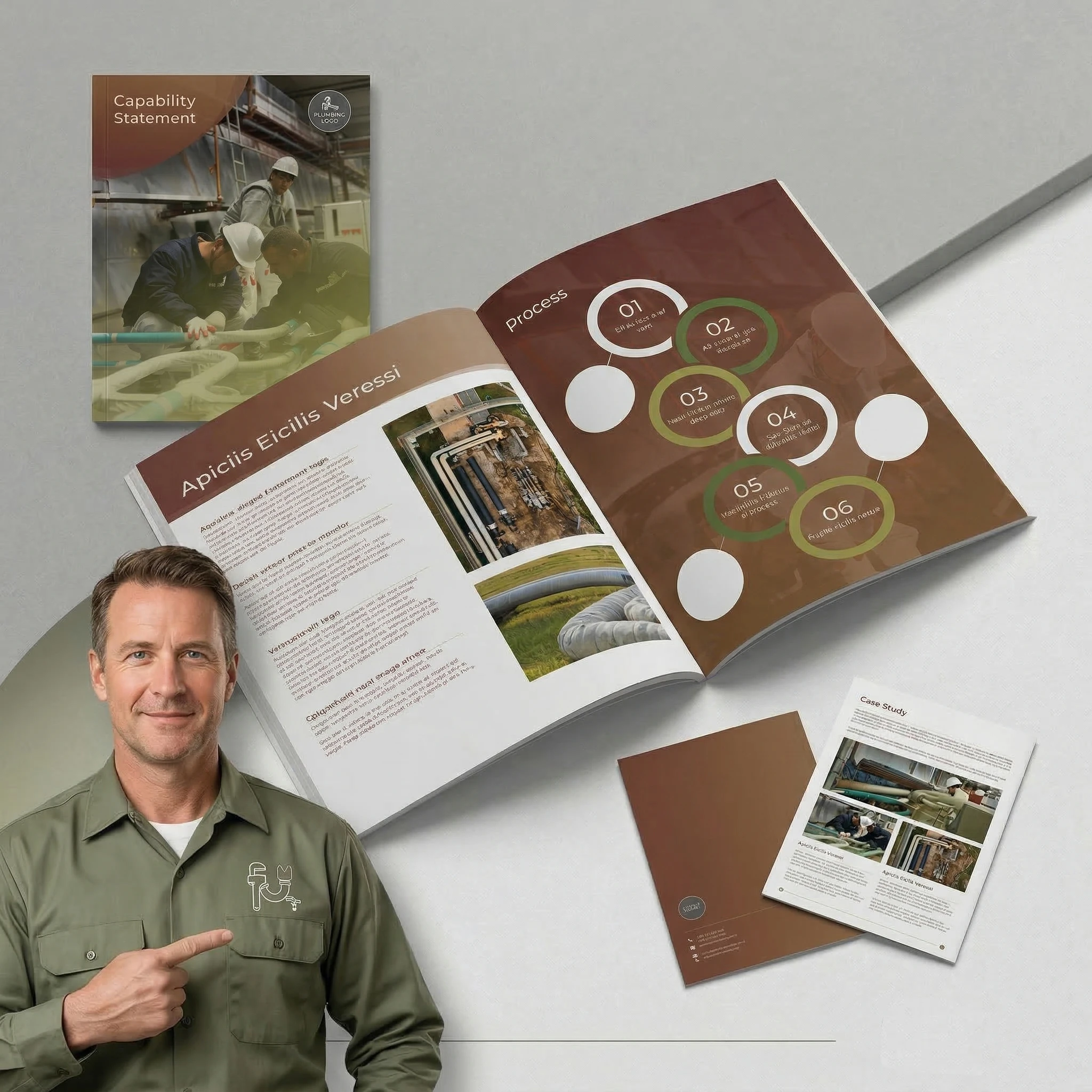
Capability statement writing for demolition contractors creates a procurement-ready contractor profile that presents demolition scope, licence evidence, insurance, SWMS, plant capacity and project experience for Australian builders, councils, developers and principal contractors.
The page covers the information a demolition business requires for tenders, subcontractor prequalification, supplier registration and direct buyer assessment. It stays focused on capability statement preparation, not demolition methodology, site safety training or tender response writing.
What Does a Capability Statement for Demolition Contractors Include?
A demolition contractor capability statement includes business identity, compliance proof, demolition service scope, safety systems, plant capacity, project evidence, key personnel and contact details in a concise contractor profile for procurement review.
01.
Company details
- Legal business name,
- Trading name
- ABN,
- Website
- Address
- phone number and email contact.

02.
Compliance proof
- Demolition licences
- Asbestos credentials where relevant
- Insurance certificates
- SWMS and permit evidence.
03.
Demolition services
- Structural demolition
- Internal strip-outs
- Site clearing
- Asbestos-related work and waste removal where those services match the contractor’s actual scope.

04.
Plant and equipment
- Excavators
- Specialist attachments
- Trucks
- Loaders
- Access equipment and owned or available machinery.

05.
Safety and environmental controls
- Risk assessments
- Induction process
- Dust control
- Noise management
- Waste separation and hazardous material handling.

06.
Project portfolio
- Completed contracts with client type
- Location
- Scope
- Plant used
- Safety controls and measurable outcome.
07.
Key personnel
- Directors
- Supervisors
- Operators
- Project managers
- Asbestos supervisors and safety roles.
Which Licences, Insurance and Compliance Details Are Included?
Licence, insurance and compliance details identify whether the demolition contractor has the required authority, cover and site controls for the work being pursued.
01.
Current demolition licence numbers and licence class where applicable.
02.
Asbestos removal credentials when asbestos-related work appears in the service scope.
03.
Public liability insurance and workers compensation details.
04.
Certificates of currency with insurer name, coverage amount and expiry date where approved for publication.
05.
SWMS, risk assessment process and site induction evidence.
06.
Environmental controls for dust, noise, waste separation and hazardous materials.
07.
Permits or council approval evidence where past projects require that context.
How Are Demolition Services, Plant and Equipment Presented?
Demolition services, plant and equipment are presented as capability evidence that shows what work the contractor performs, what machinery supports delivery and what capacity the business brings to a tender or prequalification review.
Why Do Demolition Contractors Need a Capability Statement?
Demolition contractors use a capability statement to give builders, councils, developers and principal contractors a fast way to assess compliance, capacity, safety systems and past performance before issuing work or accepting a submission.


What Information Is Required Before Writing Starts?
The writer requires identity, compliance, project, equipment and brand material before drafting a demolition contractor capability statement accurately.
Legal business name, trading name, ABN and contact details.
Licence numbers, insurance certificates and compliance documents.
Demolition service list and geographic service area.
Project examples with scope, location, client type, plant used and outcome.
Plant and equipment list with ownership or access details.
Key personnel names, roles, qualifications and experience.
Logo files, project photos and brand colours where available.
Tender requirements or prequalification criteria when the document targets a specific buyer.
Incomplete source material creates gaps in the final document.
How Much Does a Demolition Contractor Capability Statement Cost?
Demolition contractor capability statement cost depends on document length, design complexity, evidence quality, revision scope and tender-specific customisation.
Main pricing factors include:
What Project Evidence Helps Demolition Contractors Win Work?
Demolition project evidence proves relevant scope, risk control, capacity and delivery history through specific completed work examples.
| Evidence type | What to include | Why it matters |
|---|---|---|
| Project scope | Demolition type, site type, location and work package | Shows relevance to the buyer's project |
| Client context | Builder, council, developer, facility manager or private client | Shows the procurement environment |
| Plant used | Machinery, attachments, trucks and specialist equipment | Proves delivery capacity |
| Safety controls | SWMS, inductions, exclusion zones and incident controls | Shows high-risk work management |
| Environmental controls | Waste separation, recycling, dust control and hazardous material handling | Shows responsible site management |
| Outcome | Completion timing, access constraints, disposal result or handover condition | Shows project delivery evidence |
Project examples need enough detail for procurement assessment without exposing confidential client information. A consent check belongs before naming clients, contract values or restricted site details.
What Mistakes Weaken a Demolition Contractor Capability Statement?
Weak demolition capability statements fail when they use generic trade copy, omit qualification proof or make unsupported capacity claims.
Generic construction copy
Replace broad trade wording with demolition services, licence evidence and project proof.
Missing licence numbers
Include current demolition and asbestos credentials where relevant.
Outdated insurance
verify certificates of currency before publication.
Vague safety claims
Name SWMS, risk assessments, inductions and incident controls.
Weak project examples
Add scope, location, plant used, safety controls and outcome.
Unclear service scope
Separate demolition, strip-out, site clearing, asbestos-related and waste removal services.
Unsupported claims
Remove completion counts, pricing, turnaround and client results that the business cannot verify.
Each fix improves the document’s procurement value. The final statement requires facts that support buyer checks.
How Does a Demolition Contractor Capability Statement Stand Out?
A demolition contractor capability statement stands out when it proves verified compliance, high-risk work controls, plant capability, environmental handling and project delivery with specific evidence.
1
Verified licences
Current demolition credentials, asbestos qualifications where relevant and insurance details.
Strong project proof
Completed work examples with scope, client type, plant used and outcome.
2

3
Plant capability
Machinery, specialist equipment and capacity evidence matched to demolition work.
Safety systems
SWMS, risk assessments, inductions, supervisor roles and incident controls.
4

5
Environmental controls
Waste separation, recycling, dust suppression, noise controls and hazardous material handling.
Tender-aligned language
Evidence mapped to compliance, safety, experience, methodology and capacity criteria.
4

The strongest final document is evidence-led. Design improves readability, but verified demolition capability gives builders, councils, developers and principal contractors the information required for assessment.