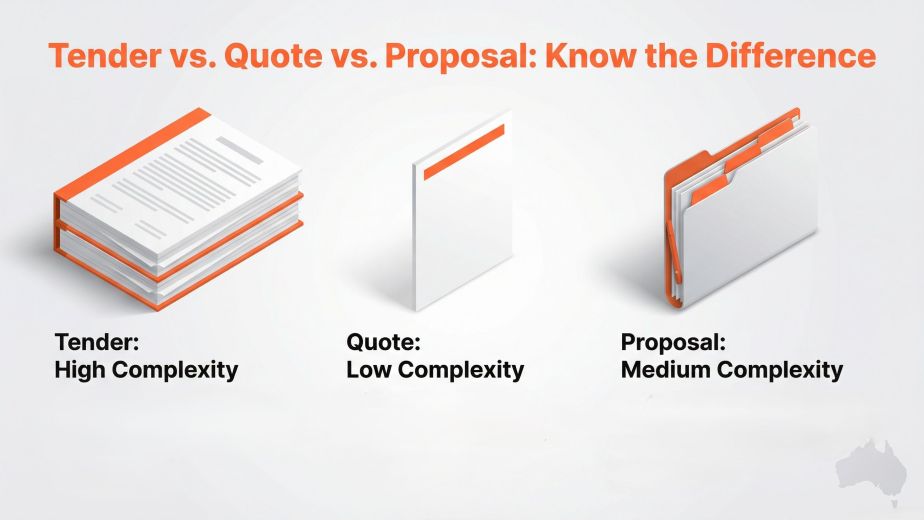





Tender requirements define the rules, evidence, criteria and submission actions an Australian supplier addresses before lodging a tender response. A complete review covers mandatory criteria, desirable criteria, tender documents, requirement categories, evaluation criteria, supplier evidence, submission rules, Australian tender settings, requirement tracking, response planning, common errors and a final tender checklist. This article focuses on supplier-side tender requirements for Australian tenders, not procurement law, tender portal navigation or buyer-side procurement design.
What Are Tender Requirements?
Tender requirements are the buyer’s rules, criteria, documents, evidence requests and submission instructions a supplier addresses in a tender response.
- Buyer rules describe eligibility, conditions for participation, contact rules and required forms.
- Tender criteria describe the questions, specifications and response areas the supplier answers.
- Evidence requests identify the licences, insurance, certifications, project examples and policies that prove capability.
- Submission instructions control portal upload, closing time, file format, signatures and returnable schedules.
A tender response is the supplier’s formal submission to a buyer. It becomes easier to draft when each requirement has a source reference, evidence owner and response location before writing begins.
What Is The Difference Between Mandatory And Desirable Tender Requirements?
Mandatory tender requirements control eligibility, while desirable tender requirements improve the supplier’s score or attractiveness to the buyer.
The table below separates the two requirement types for response planning.
| Requirement type | Purpose | Impact | Evidence | Response action |
| Mandatory requirement | Confirms eligibility and compliance | Failure creates rejection or exclusion risk | Required certificates, forms, declarations or documents | Address first and verify before drafting |
| Desirable requirement | Shows added value or stronger suitability | Weak coverage reduces score quality | Examples, methodology detail, value statements or optional proof | Answer after mandatory items are secure |
| Weighted criterion | Allocates score to a buyer priority | Higher weighting changes answer depth | Detailed evidence linked to the criterion | Match response depth to weighting and word limit |
Pass-fail criteria belong in the first review pass. Weighted and desirable criteria belong in the response quality pass after eligibility is clear.
Where Do Tender Requirements Appear In The Tender Documents?
Tender requirements appear across the full tender pack, not only in the main question document.
- RFT: A request for tender sets detailed requirements for a formal supplier response.
- RFQ: A request for quotation sets price, scope and delivery requirements for a quote-based response.
- EOI: An expression of interest asks suppliers to confirm capability before a later tender stage.
- Draft contract: The draft agreement lists legal, commercial, liability, payment and performance requirements.
- Specifications: The specification describes technical standards, scope, deliverables and performance expectations.
- Schedules: Returnable schedules collect pricing, declarations, compliance responses and supplier details.
- Attachments: Attachments include forms, policies, drawings, templates, certificates and supporting documents.
- Addenda: Addenda are buyer updates that change or clarify requirements after release.
A supplier loses requirement coverage when the response team reviews only the main questions and ignores schedules, contract terms or addenda.
What Types Of Tender Requirements Do Australian Suppliers Check?
Australian suppliers check legal, technical, financial, safety, capability, commercial and submission requirements before drafting starts.
- Legal requirements: entity details, ABN, ACN, authority to sign, confidentiality, liability and contract conditions.
- Technical requirements: specifications, methodology, standards, equipment, personnel, deliverables and acceptance criteria.
- Financial requirements: pricing schedules, payment terms, solvency declarations, financial capacity and value-for-money statements.
- Safety requirements: WHS systems, safe work method statements, licences, incident records and safety certifications.
- Capability requirements: project examples, references, key personnel, certifications, past performance and supplier profile.
- Commercial requirements: contract departures, assumptions, insurance, warranties, subcontracting and risk allocation.
- Submission requirements: portal upload, closing time, file naming, page limits, signatures and returnable schedules.
How Do Tender Requirements Relate To Evaluation Criteria?
Tender requirements relate to evaluation criteria because mandatory items decide eligibility and evaluation criteria decide how the eligible response is scored.
| Item | Role in the tender | Supplier action |
| Mandatory requirement | Pass-fail condition | Confirm and evidence before drafting |
| Evaluation criterion | Assessment question or category | Answer directly with relevant proof |
| Weighted criterion | Scored criterion with stated importance | Allocate more detail and evidence to higher weighting |
Assessment criteria require direct answers. Generic capability claims reduce clarity when the criterion asks for a specific method, project example or risk control.
What Evidence Proves A Supplier Meets Tender Requirements?
Supplier evidence proves tender requirements by showing current credentials, relevant experience, compliance documents and completed response schedules.
Common evidence categories include the following items.
- Licences: trade licences, professional registrations and permits linked to the scope.
- Insurance certificates: public liability, professional indemnity and workers compensation evidence.
- Certifications: ISO, WHS, environmental, quality or industry-specific certifications.
- Project evidence: case studies, contract examples, client references and completion outcomes.
- Policies: safety, quality, environmental, privacy, modern slavery and diversity policies where requested.
- References: referee details, customer confirmations or performance records.
- Schedules: signed declarations, pricing schedules, compliance statements and conflict forms.
- Financial information: solvency statements, financial accounts or capacity declarations where requested.
The buyer’s tender documents define the exact evidence list. A previous bid library helps locate proof, but the current tender pack controls the final response.
How Can A Capability Statement Help Answer Tender Requirements?
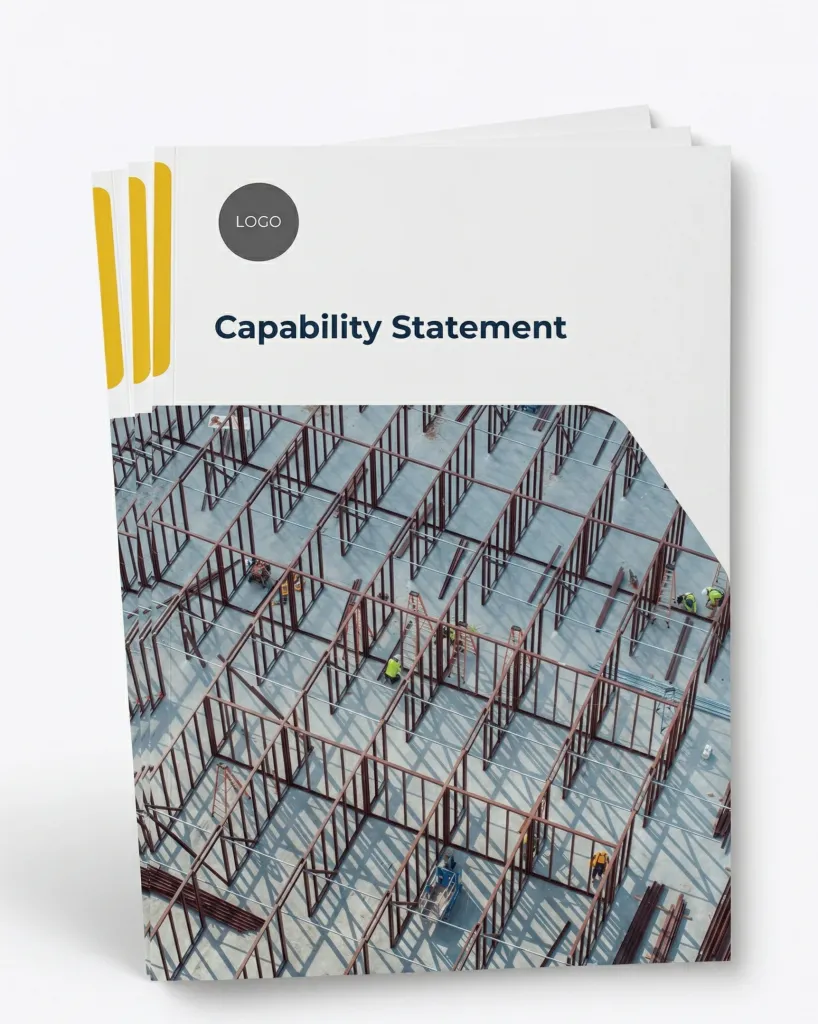
A capability statement helps answer tender requirements by giving the bid team reusable proof of supplier capability, project experience, credentials and key personnel.
- It records business details, service categories, operating locations and relevant credentials.
- It summarises project examples, scopes, client types and outcomes.
- It stores certifications, licences, insurance details and key personnel information.
- It supports evidence preparation without replacing tender-specific answers.
Which Submission Requirements Can Make A Tender Non-Compliant?
Submission requirements make a tender non-compliant when the supplier misses a lodgement rule, required form, format condition or closing instruction.
- Portal upload: use the nominated tender portal and confirm lodgement receipt.
- Closing time: submit before the stated closing time and time zone.
- File naming: apply the exact naming convention listed in the instructions.
- File format: submit only accepted file types such as PDF, Word or Excel.
- Signatures: include authorised signatures, witness details and dated declarations.
- Returnable schedules: complete every listed schedule and form.
- Page limits: keep the response inside stated page limits and attachment rules.
- Word limits: answer each criterion inside the stated word count.
- Addenda acknowledgements: confirm every buyer update has been reviewed and addressed.
What Australian Tender Requirements Matter Most For Suppliers?
Australian tender requirements that matter most for suppliers are portal rules, government procurement conditions, policy certificates, probity expectations, eligibility checks and buyer-specific instructions.
- Government portals: AusTender, state portals and council portals set registration, upload and notification rules.
- CPRs: Commonwealth Procurement Rules are Australian Government procurement rules for relevant Commonwealth entities.
- State policies: state buyers apply local participation, jobs, safety, sustainability or industry policy conditions.
- Probity: probity means fair, ethical and documented procurement behaviour across the tender process.
- Supplier eligibility: buyers check entity status, licences, insurance, financial capacity and contract authority.
- Policy certificates: some tenders request certificates or declarations linked to workplace, safety or social policy settings.
- Buyer-specific rules: each agency, council or private buyer can add instructions that override generic tender habits.
This section gives content guidance, not legal advice. The tender pack, buyer addenda and professional legal advice control the final interpretation.
How Do Tender Requirements Differ In Construction Tenders?
Construction tender requirements differ because the response usually connects technical specifications, site conditions, safety systems, drawings, contract terms and subcontractor controls.
- Specifications define materials, standards, workmanship and performance outcomes.
- Drawings define quantities, interfaces, locations and build details.
- Site conditions affect access, staging, safety controls and delivery methods.
- Safety systems prove WHS readiness, licences, training and incident controls.
- Contract terms define variations, delays, payment claims, indemnities and risk allocation.

Which Legal Requirements Do Suppliers Check Before Tendering?
Suppliers check legal requirements before tendering by confirming entity details, authority to sign, contract terms, liability exposure, indemnities, intellectual property and payment terms.
- Entity details: ABN, ACN, legal name, trading name and registration status.
- Authority to sign: director, authorised officer or delegated representative approval.
- Contract terms: scope, deliverables, acceptance, termination and dispute clauses.
- Liability and indemnities: risk allocation, insurance alignment and responsibility for loss.
- Intellectual property: ownership, licensing, moral rights and use of submitted material.
- Payment terms: milestones, invoicing rules, retention, variations and late payment terms.
How Are Clarifications And Addenda Handled?
Clarifications and addenda are handled by treating every buyer update as a possible change to the tender requirements.
- Monitor the buyer portal, tender mailbox and clarification register.
- Log each clarification or addendum with the date, source and affected requirement.
- Update the requirement register, evidence list and response draft.
- Check pricing, methodology, legal terms and submission files after each update.
How Do You Track Tender Requirements Before Submission?
Tender requirements are tracked before submission by using a compliance matrix or requirement register that links each requirement to evidence, ownership, response location and review status.
| Register field | What it records |
| Requirement | The exact buyer instruction, criterion or schedule item |
| Source reference | The tender document, page, clause or attachment source |
| Evidence | The licence, certificate, policy, schedule, case study or response text required |
| Owner | The person responsible for supplying or approving the item |
| Response location | The section, appendix or file where the answer appears |
| Status | Not started, drafted, reviewed, approved or lodged |
| Reviewer | The person who confirms the requirement has been met |
- Create the register after the first tender pack review.
- Add every mandatory item, evaluation criterion, attachment and lodgement rule.
- Assign owners for evidence, technical answers, pricing, legal review and approvals.
- Update the register after every clarification or addendum.
- Use the register for the final pre-submission review.
How Do You Turn Tender Requirements Into A Response Plan?
Tender requirements become a response plan when each requirement is converted into a writing task, evidence task, review task or lodgement action.
- Group requirements by response section, such as company capability, methodology, pricing, risk, safety and compliance.
- Convert writing requirements into draft tasks with a word limit, owner and evidence source.
- Convert evidence requirements into collection tasks for licences, policies, case studies, references and schedules.
- Convert commercial requirements into pricing, assumptions, contract departure and approval tasks.
- Convert technical requirements into methodology, staffing, equipment, delivery and quality tasks.
- Convert review requirements into compliance, technical, legal, finance and management approval tasks.
- Convert lodgement requirements into file naming, format, portal upload, signature and receipt tasks.
What Mistakes Cause Suppliers To Miss Tender Requirements?
Suppliers miss tender requirements when the response process lacks requirement mapping, evidence ownership, addenda tracking and final compliance review.
- Missed attachments. Prevention: create an attachment register from the tender pack.
- Unanswered criteria. Prevention: map every criterion to a response section and reviewer.
- Generic responses. Prevention: write each answer to the buyer’s exact criterion and evidence request.
- Overlooked addenda. Prevention: monitor updates and revise the requirement register after each change.
- Late evidence. Prevention: assign evidence owners and internal due dates before drafting starts.
- Unclear ownership. Prevention: give each requirement one accountable owner.
- Format breaches. Prevention: check page limits, word limits, file names, signatures and file types before lodgement.
What Does A Tender Requirements Checklist Include?
A tender requirements checklist includes requirement checks, document checks, evidence checks, evaluation checks, Australian context checks, tracking checks, approval checks and lodgement checks.
- Requirements: confirm every mandatory item, desirable criterion, weighted criterion and buyer instruction.
- Documents: confirm the RFT, RFQ, EOI, draft contract, specifications, schedules, attachments and addenda have been reviewed.
- Evidence: confirm licences, insurance, certifications, case studies, policies, references and financial information are current.
- Evaluation criteria: confirm each criterion has a direct answer, evidence source and reviewer.
- Australian context: confirm portal rules, CPRs where relevant, state policies, probity conditions and supplier eligibility.
- Tracking: confirm the compliance matrix or requirement register is complete and current.
- Approvals: confirm legal, technical, finance, management and authorised signatory approvals are recorded.
- Lodgement: confirm file names, file types, signatures, returnable schedules, upload receipt and closing time.
This final tender checklist closes the same requirement loop opened at the start: tender requirements, Australian tenders, mandatory criteria, supplier evidence and response planning all meet in the pre-submission review.
Can A Tender Be Rejected For Missing One Requirement?
YES, a tender can be rejected for missing one requirement when the requirement is mandatory, controls eligibility or appears as a required attachment or lodgement condition. Minor or clarifiable issues depend on the buyer’s tender rules and discretion.
Do Suppliers Answer Every Evaluation Criterion?
YES, suppliers answer every evaluation criterion because unanswered criteria reduce score quality and make the response harder to assess. Answer depth matches the weighting, word limit and evidence requested in the tender documents.
Can AI Identify Tender Requirements Reliably?
NO, AI cannot identify tender requirements reliably without human verification. AI tools can extract draft requirement lists, but a person verifies the tender pack, addenda, attachments, legal terms and lodgement rules.